
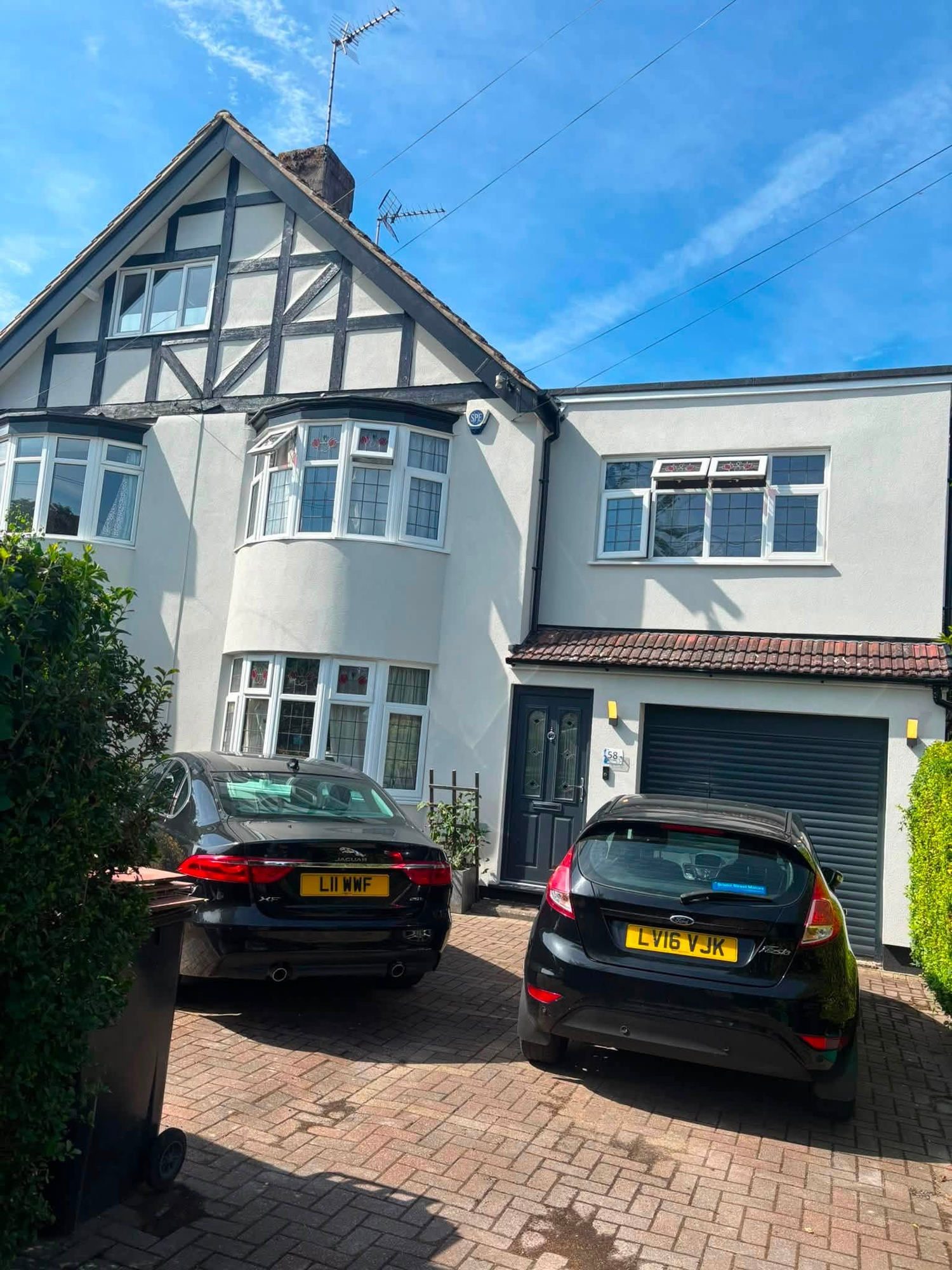
Driveways
Kyren lays block paving and resin. Whichever one goes on top, a driveway is mostly the part you cannot see: dig out, sub-base, edge restraints and drainage decide whether it is still flat in five winters.
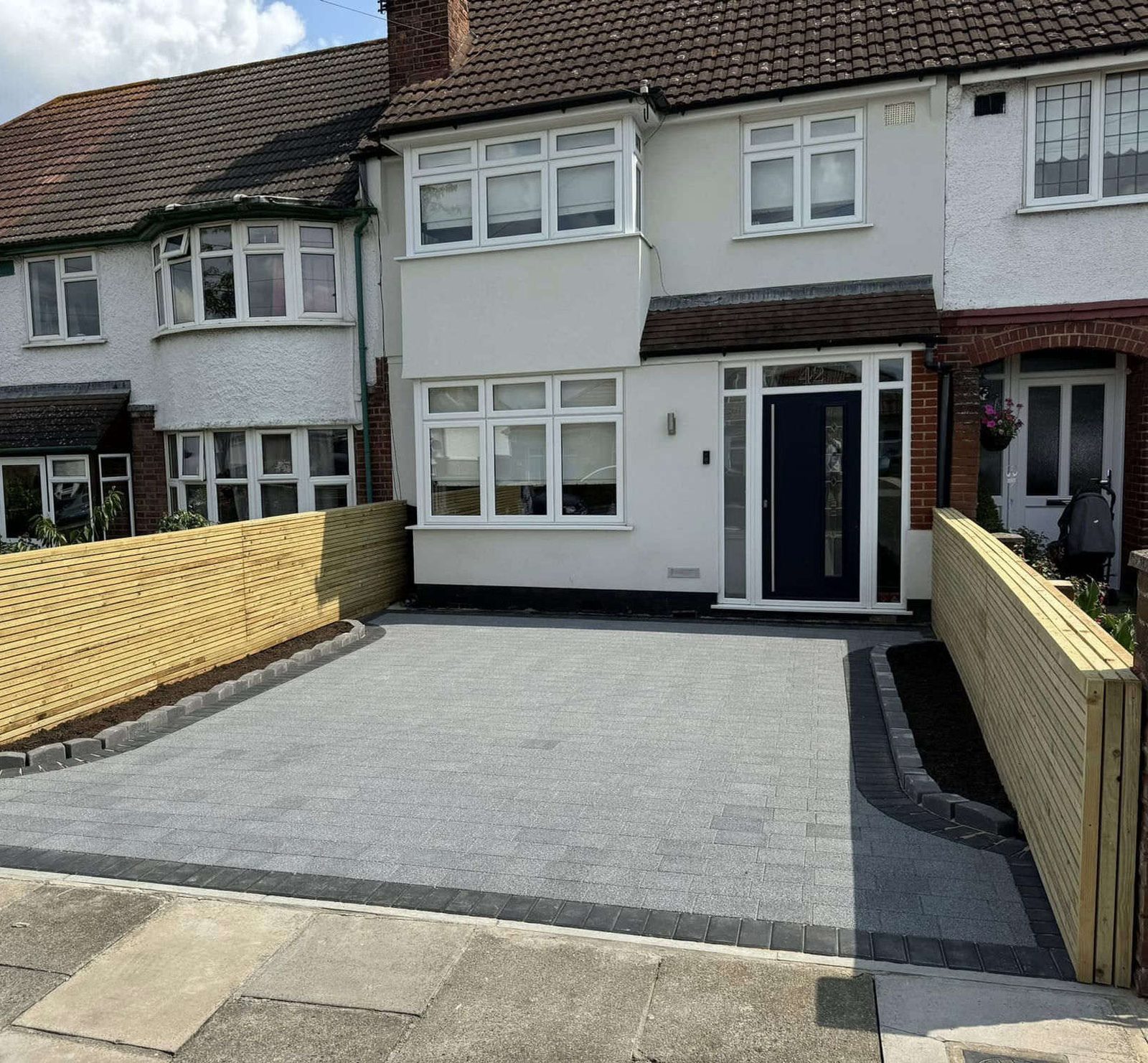
- 20-year guarantee
- Fully insured
- No money upfront
- Free written quote
Why driveways sink, and what stops it
Almost every failed driveway failed underneath. Blocks laid over the old surface, or onto a sub-base too thin to carry a car, will move. Once the surface starts to dish, water collects in it, and water in a base is what turns a small dip into a big one. Resin is no different in that respect: it is a surface, and it is only ever as good as the base it is sitting on.
The ground here does not help. Much of BR5, BR6 and BR7 sits on London clay, which shrinks in a dry summer and swells again in winter. That movement is precisely why the depth of compacted stone under the blocks matters more than which block you pick.
The other half of the job is restraint. Blocks are held in place by the edge courses around them, haunched in concrete. Without that the whole field creeps outwards under the weight of a car turning, and the joints open up.
Block paving driveways
The trade the company is named after, and still most of the driveways Kyren lays.
The pattern is set out from the house rather than from the road, so the lines run square to the building and the cuts land at the edges where they show least. Herringbone through the middle where cars turn and brake, because that is the pattern that locks together under a twisting wheel, then a soldier course or a contrasting border to hold the edge and frame it.
The practical advantage of block paving driveways is that they come back up. If a service trench has to go across one, or a bay gets stained, that patch is lifted and relaid and the repair does not show. A continuous surface has to be cut.
Colour and format get picked at the quote against the brick, the render and the roof, because a drive that fights the front of the house is one you notice for the wrong reason.
How a block paving drive is built up
Five stages. The first three decide how long it lasts, and they are the same three whichever surface goes on top.
- 01
Survey and levels
Where the water currently goes, where it needs to go, and how much fall there is to play with between the house and the road.
- 02
Dig out and cart away
The old surface and the soft ground under it come out and go on a lorry. Cutting this short is why driveways sink.
- 03
Sub-base and compaction
Compacted stone to a depth that will take the weight of a car, whacked in layers rather than all at once.
- 04
Edge restraints and laying course
Edge courses haunched in concrete to hold the blocks in, then a screeded sand laying course over the base.
- 05
Blocks, cuts and kiln-dried sand
Pattern set out from the house, clean cuts to the edges, then whacked down and jointed with kiln-dried sand.
Patterns, borders and finishes
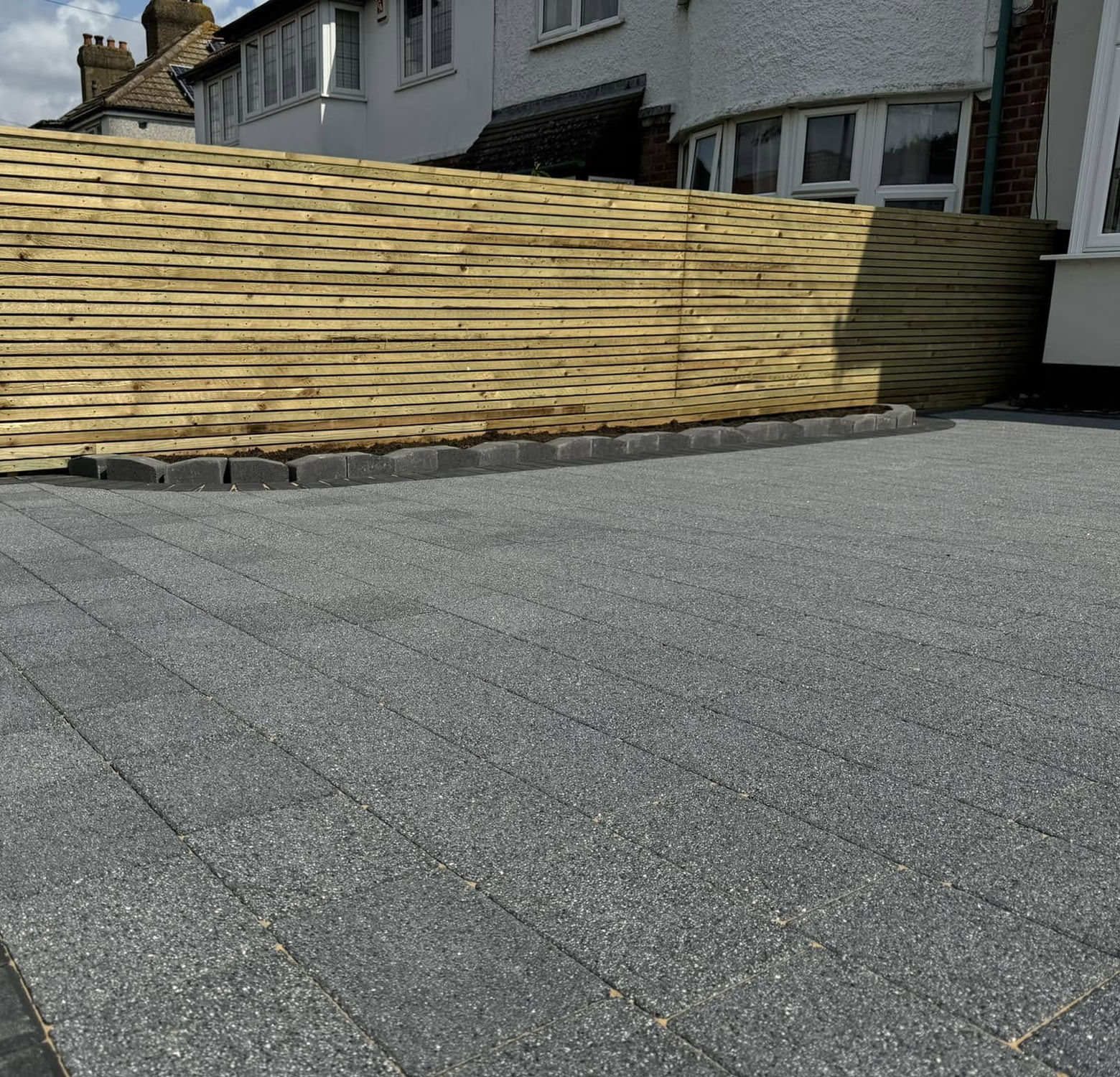
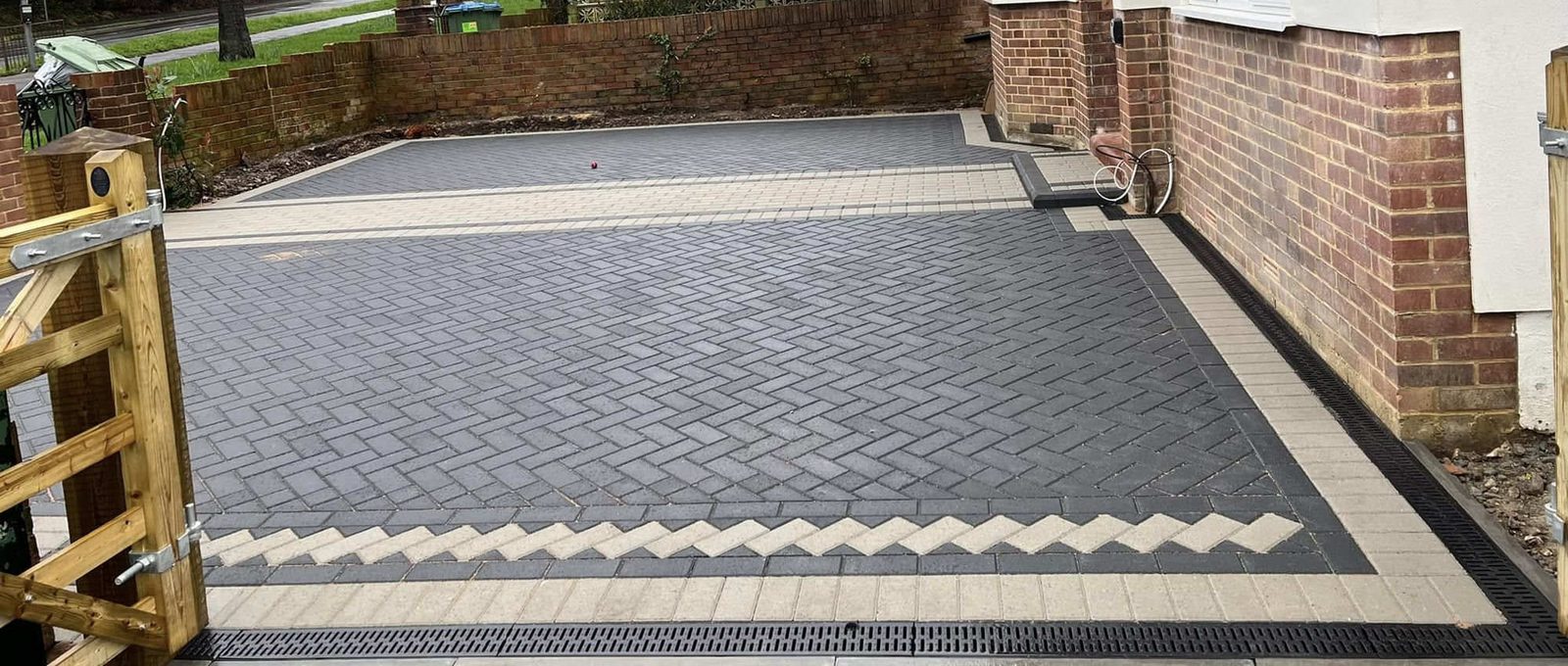
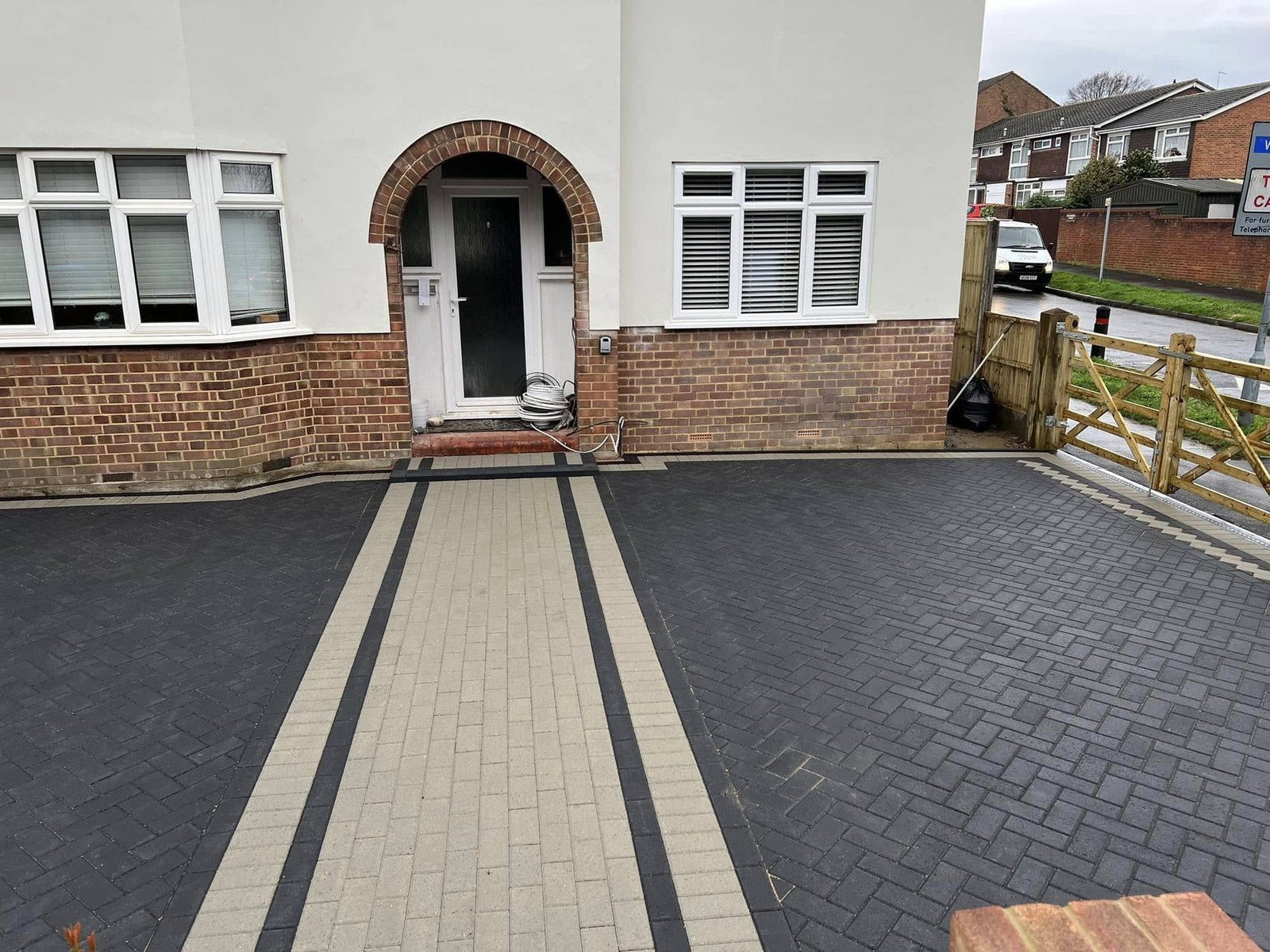
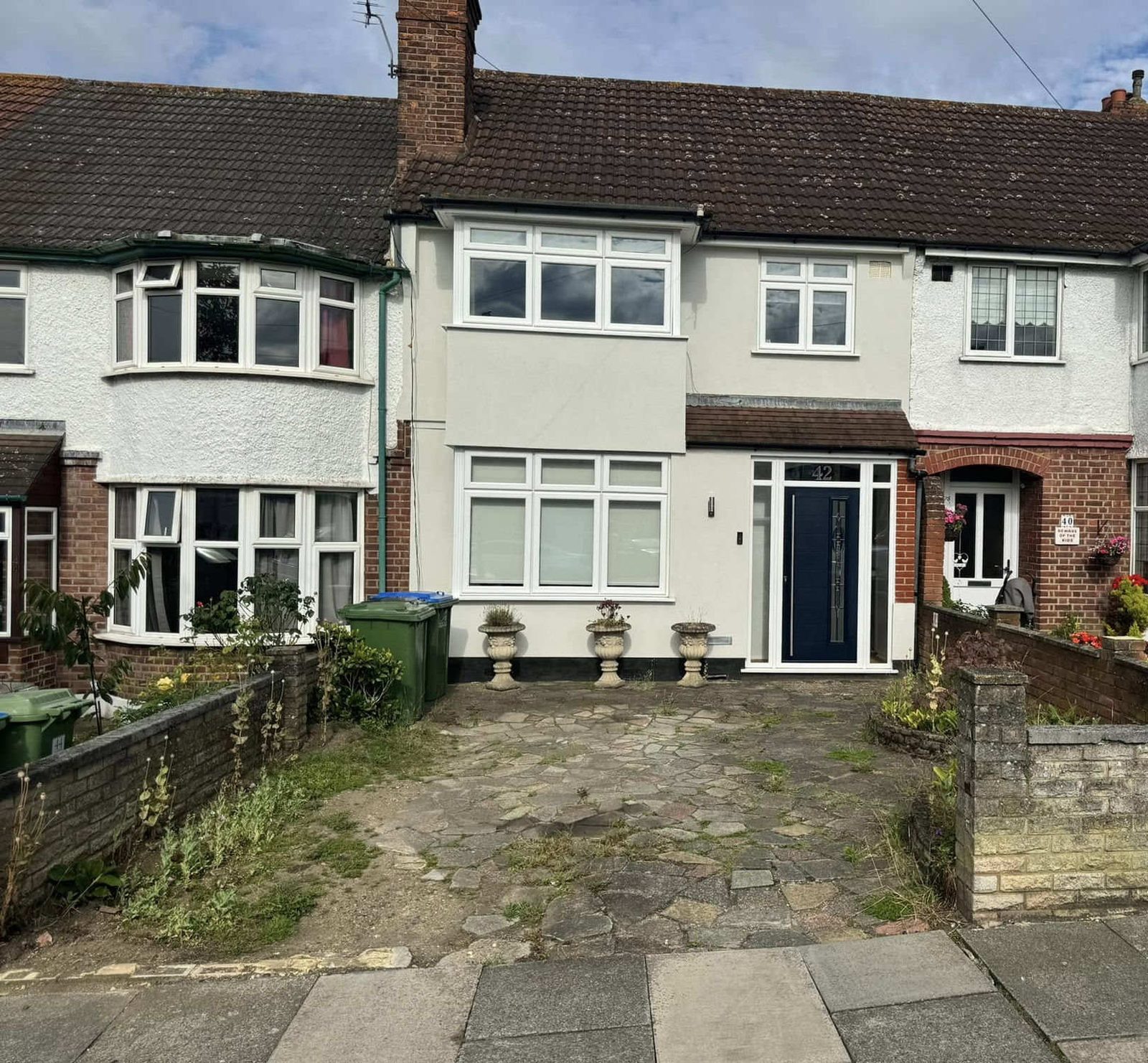
Crazy paving to charcoal blocks
Resin driveways
Kyren lays resin as well as block. One continuous surface, with no joints in it.
Resin goes down over a sound base in the same way block does. The first three stages above — the survey and the falls, the dig out, and the compacted sub-base — are the same job either way. What changes is the surface that goes on at the end and the way it is finished.
Choosing between the two is mostly about the look of the front of the house and what you want it to do, and it is a different price. That is a conversation worth having on site with the house in front of you, not a decision to make off a website.
Every photograph on this page is block paving. If resin is what you have in mind, say so when you ring and Kyren will talk you through both when he comes to measure up.
Is this the right answer for your house?
Not sure which of the two you want? Block paving driveways can be lifted and relaid in patches, and take a border you can pick out against the brick. Resin driveways give you one continuous surface with no joints in it. Both want the same base underneath, so the choice is about the look and the price rather than about the groundwork.
If the front garden has levels, walls or steps in it, that is landscaping as much as paving. It is the same crew. See the patios and landscaping page.
If the front of the house is going to be rendered at some point, do the render first and the drive second. Scaffold feet and render splashes on new blocks are avoidable. More on render.
Common questions
Do you lay resin as well as block paving?
Yes, Kyren lays both. Which one suits your house is worth talking through on site, and there is no charge for him to come and look at it.
Do I need planning permission for a new driveway?
Not if the surfacing is permeable or porous, and not if the water drains to a lawn or border on your own land. Permission is needed for more than five square metres of impermeable surfacing draining straight onto the road. We deal with the drainage as part of the job.
How deep does the sub-base need to be?
It depends on the ground and on what is going to be parked on it. On clay, which is most of this area, it wants more rather than less. Kyren will tell you what he is digging to when he quotes.
Will you take the old drive away?
Yes. Spoil removal and tip charges are on the quote as their own line so you can see them.
Do you fit drainage?
Yes. A channel drain or a soakaway, depending on the fall and where the water can go.
What blocks do you use?
We work with Tobermore block paving among others. If you have seen a drive locally that you like the look of, photograph it and send it over.