
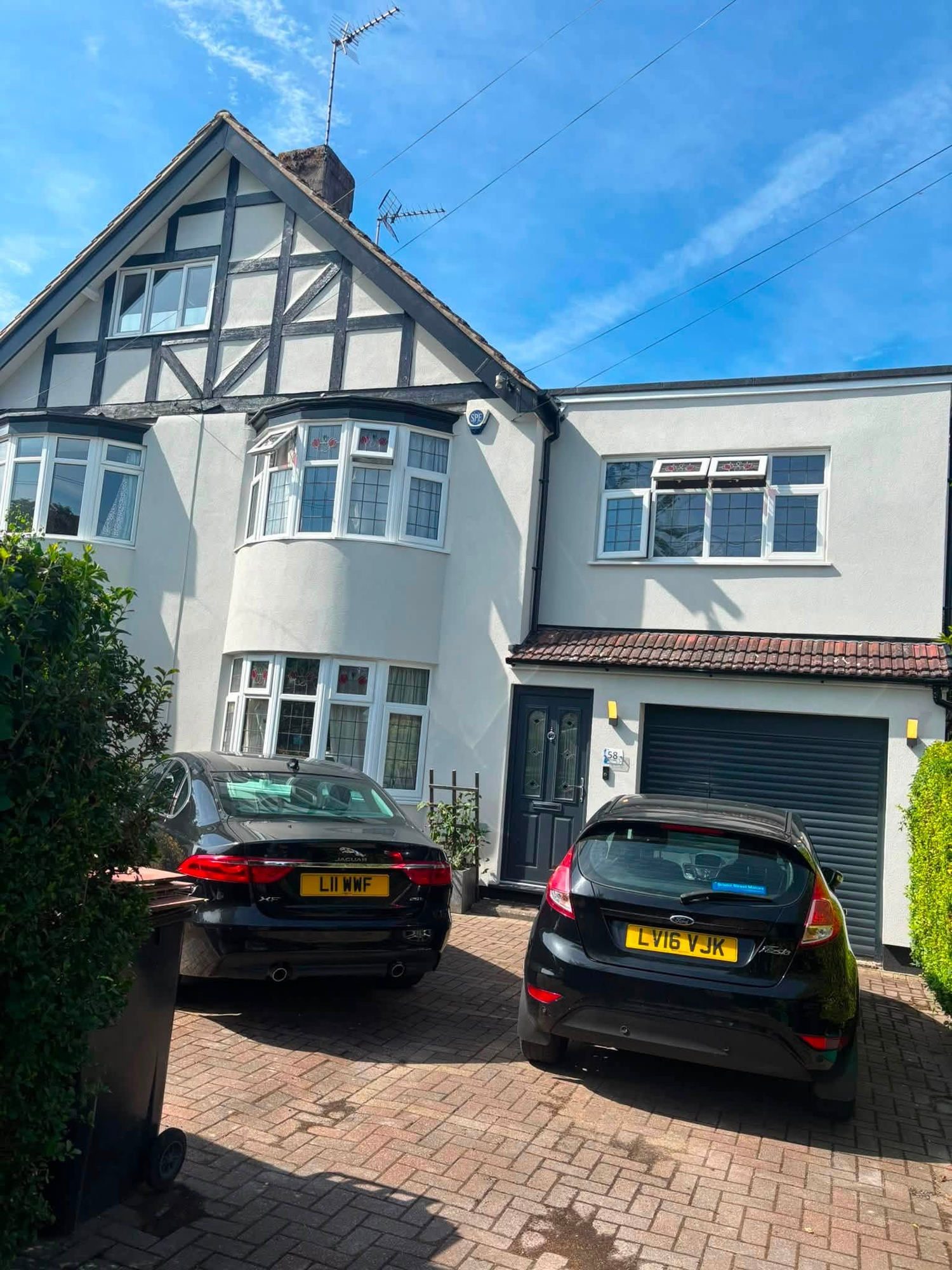
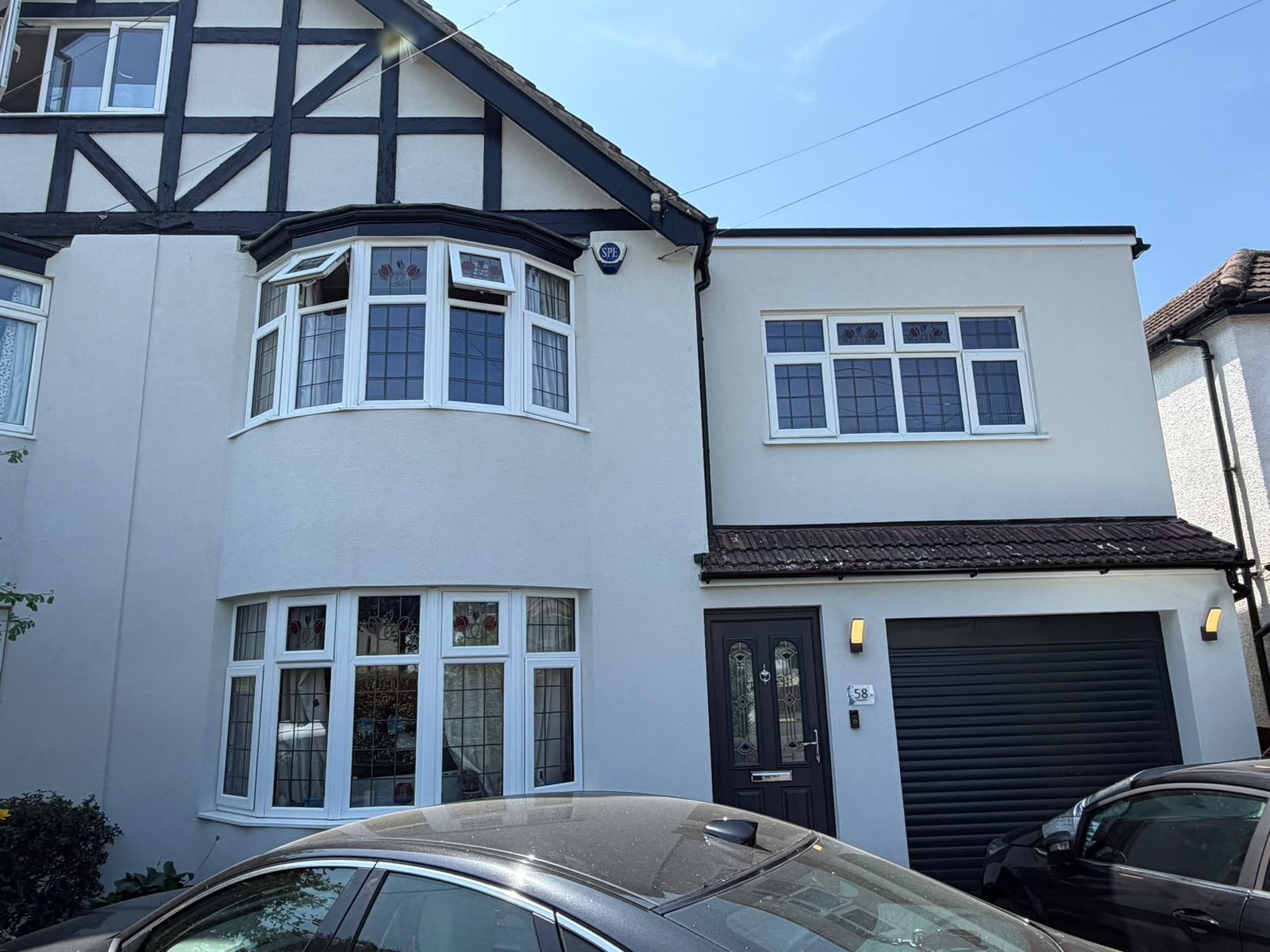
External wall insulation specialists, for the whole house
Insulation boards on the outside of your walls, a K Rend or Licata silicone render over the top, and nothing inside your home touched.
- 20-year guarantee
- Fully insured
- No money upfront
- Free written quote
Get a written price for your house
The quality of the workmanship really stands out.
Tell him about the job
Three details is all it takes — name, phone and area. The photo is optional.
- 20-year guaranteeIssued to you in writing when the scaffold comes down.
- Fully insuredOn every job, before anybody goes up a scaffold.
- No money upfrontNothing is paid before the work starts.
- Free written quoteThe survey is free, the quote is written, and there is no obligation at the end of it.
Would you rather talk it through? 07301 346293Kyren answers his own phone, and calls back within the half hour if he is up a scaffold.
What it costs
Every house is different, so the number comes after Kyren has measured yours. What is fixed is how the quote is written.
- The quote
- Written, free, and the number on it is the number you pay. Kyren measures the elevations himself before he gives you one, because the size of the walls, the access and what has to come off first are what decide it.
- Scaffold
- Priced separately, as its own line on the quote. It is not folded into a rate and we are not going to pretend it is.
- Paying for it
- No money upfront.
It would be easy to fold the scaffold into the square metre rate. It makes the headline number look better and it moves the surprise to the end of the job. We quote it as its own line instead, so the figure you are given is the figure you pay.
If you are holding another quote and it does not say anywhere what the scaffold costs, that is worth a question before you sign it.
Every quote is written down and free, and there is no money upfront on any of it. Kyren answers his own phone. If he is up a scaffold when you ring he calls back, usually within the half hour.
Do we cover you?
Our team of specialists travel significant distances to get your job sorted. The quickest way to find out about your address is to ask. Kyren answers his own phone, and if he is up a scaffold when your enquiry comes in he rings back, usually within the half hour. The visit is free and the quote is written.
Still deciding? The detail is all below.
Rated on Google
What external wall insulation actually is
Most houses around here lose more heat through their walls than through anything else. If the wall is solid brick there is no cavity to fill, so the only way to insulate it is from the inside or from the outside. From the inside means stripping rooms back to the brick, losing floor space in every one of them and living in a building site while it happens.
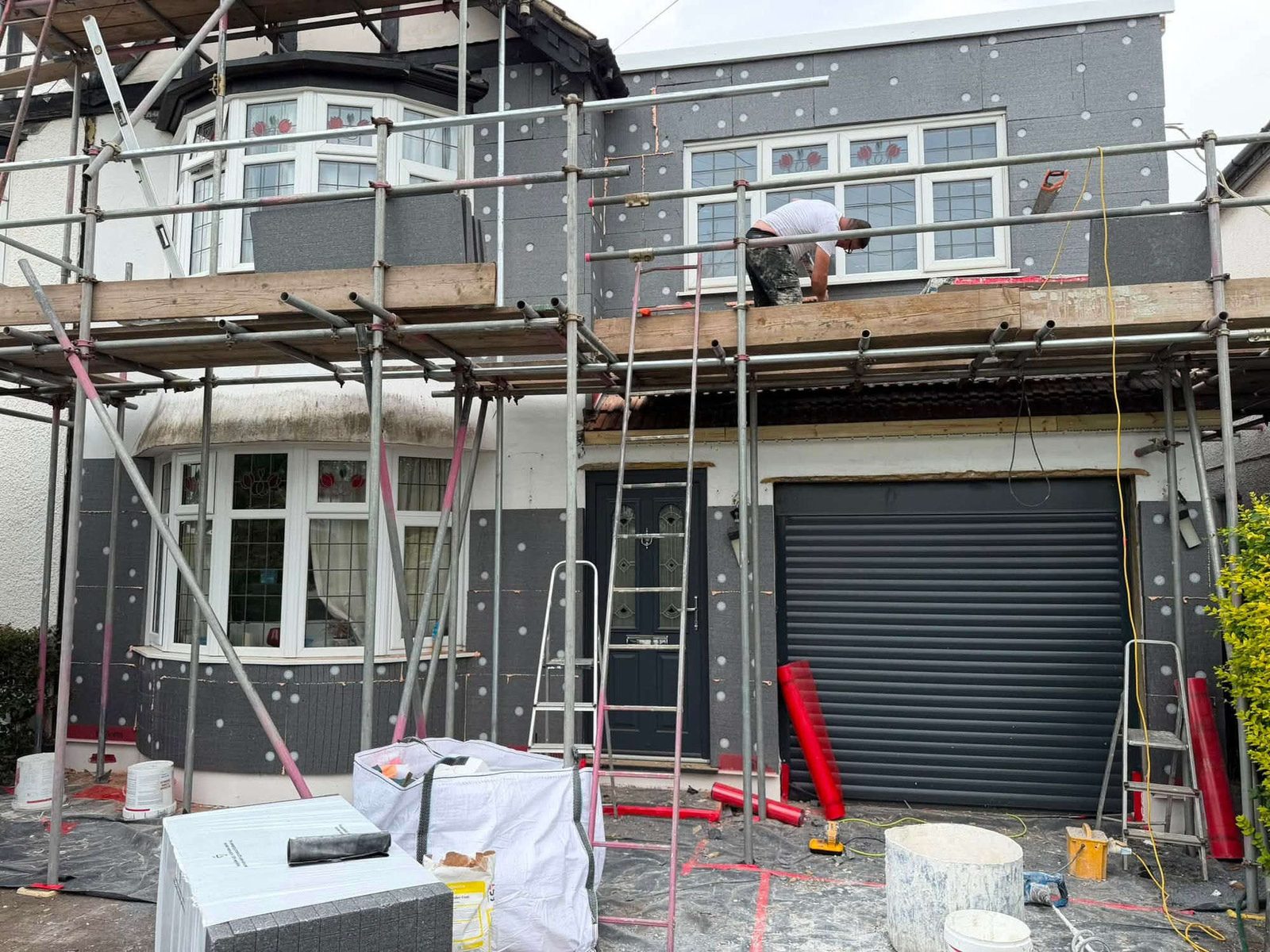
External wall insulation does it from the outside instead. Insulation boards are fixed to the face of the existing wall and mechanically pinned back into it. Over the boards goes a basecoat with glass fibre mesh bedded through it, beads to every corner, reveal and sill, and then a through-coloured K Rend or Licata silicone topcoat.
The result is that your brickwork ends up on the warm side of the insulation instead of the cold side. It is one job and one scaffold: the house is insulated and re-fronted at the same time, and nobody has to come inside to do it.
The topcoat is worth understanding in its own right. Silicone render is through-coloured, so the pigment runs all the way through the material instead of sitting on top of it like paint — there is nothing to repaint every few years. The face is hydrophobic, so rain beads on it and takes the dirt down the wall with it as it runs, which is why a silicone elevation still looks clean years after a painted one on the same road has gone grey on the north side. And it stays vapour permeable, so the wall can still breathe. More on silicone render itself.
What it changes about the house
Six things, and only one of them is the thing you can see from the pavement.
- Warmth
- Rooms hold their heat instead of pushing it out through the wall. It shows up in January, in the north-facing rooms and the ones over the garage.
- Cold walls
- Condensation forms where warm, damp air meets a cold surface. Once the insulation is on the outside, the inside face of your wall is no longer that cold surface.
- Running costs
- Less heat leaving through the wall is less heat you have to pay to put back. How much depends on your house, your walls and how you heat it, so anyone quoting you a figure before they have seen it is guessing.
- The front of the house
- Blown pebbledash, patched brick, thirty years of paint. It goes under one flat, through-coloured finish, in a colour you choose.
- Upkeep
- The colour runs all the way through silicone render rather than sitting on top of it like paint, so a chip does not show a different colour underneath and there is nothing to repaint every few years.
- Your rooms
- All of the work is on the outside. You keep every inch of your floor space and you carry on living in the house while it happens.
Why external wall insulation goes wrong
Most render websites will not put this on the page. If you have been reading about external wall insulation for more than ten minutes, you have already seen it anyway.
In October 2025 the National Audit Office reported on the homes that had external wall insulation fitted under the government-funded insulation schemes. An estimated 22,000 to 23,000 of them, 98% of the total, needed remedial work, and around 6% had faults serious enough to count as an immediate safety problem.
The system is not what failed. Those were volume installations done at scheme rates, and what went wrong was the detailing: the parts of the job that get covered up on the same day they are done, and that nobody can inspect afterwards without taking the wall apart.
This is not that work. It is private work you are paying for yourself, there is nobody standing between you and the man doing it, and the list beside this is what the money is actually buying.
- Gaps between boards
- A gap is a cold line running right through the insulation, and a cold line is somewhere for condensation to form. Boards go on butted tight and cut to fit around bays, reveals and sills, rather than gapped and filled afterwards.
- Adhesive and nothing else
- Adhesive on its own does not hold an insulated render system on a wall. Every board is mechanically pinned back into the original brickwork. The fixings carry the load, not the glue.
- Mesh that does not overlap
- The glass fibre mesh bedded into the basecoat is the layer that stops the wall cracking. It runs across the whole elevation and it overlaps at every joint, which is not the same as a strip over the obvious corners.
- Nowhere for the water to go
- Water has to leave the wall somewhere. Beads to every corner, reveal and sill, and a bell drip where the render stops, so rain runs off the face of the wall instead of tracking down behind it.
- Nothing in writing
- The guarantee on this work is 20 years and you are given it in writing when the scaffold comes down. A guarantee you cannot produce two years later is not a guarantee.
How the job runs
Seven stages, photographed on Kyren's own jobs while the work was still open.
- 01
Survey and written quote
Kyren comes out, measures the elevations and looks at what is already on the wall. You get a written quote with the scaffold priced as its own line. No charge, no obligation and no money upfront.
- 02
Scaffold and prep
Scaffold to every elevation being worked on. Windows and doors masked, and anything coming off the wall — pipes, aerials, lights, meter boxes — comes off first rather than being rendered around.
- 03
Insulation boards
Boards fixed to the existing wall with adhesive and then mechanically pinned back into it, cut to fit around bays, reveals and sills. This is the part that changes how the house feels in winter, and the part nobody ever sees again.
- 04
Basecoat and glass fibre mesh
Mesh bedded into a basecoat across the whole elevation and overlapped at every joint. This is the layer that stops the wall cracking.
- 05
Beads to every edge
Corner beads, stop beads and bell drips to every edge, reveal and sill. Straight lines here are the whole reason a finished wall looks straight.
- 06
Silicone topcoat
K Rend or Licata silicone, applied and then floated to the texture you have chosen. Colour through the coat, so it is not a paint film waiting to peel.
- 07
Scaffold down, guarantee issued
Everything that came off the wall goes back on, the site is cleared, and the 20-year guarantee is issued to you in writing.
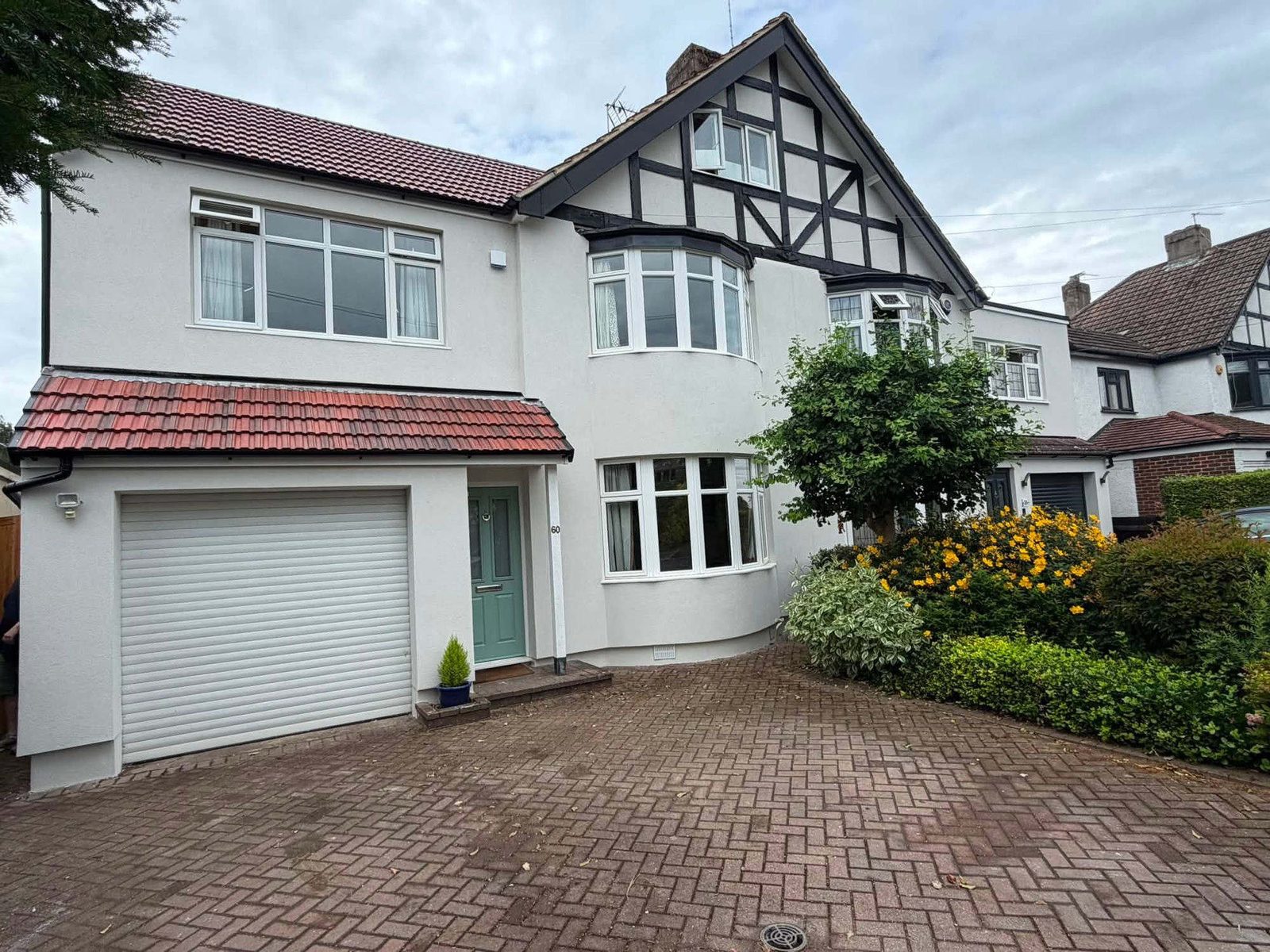
Boards on, render over, scaffold down
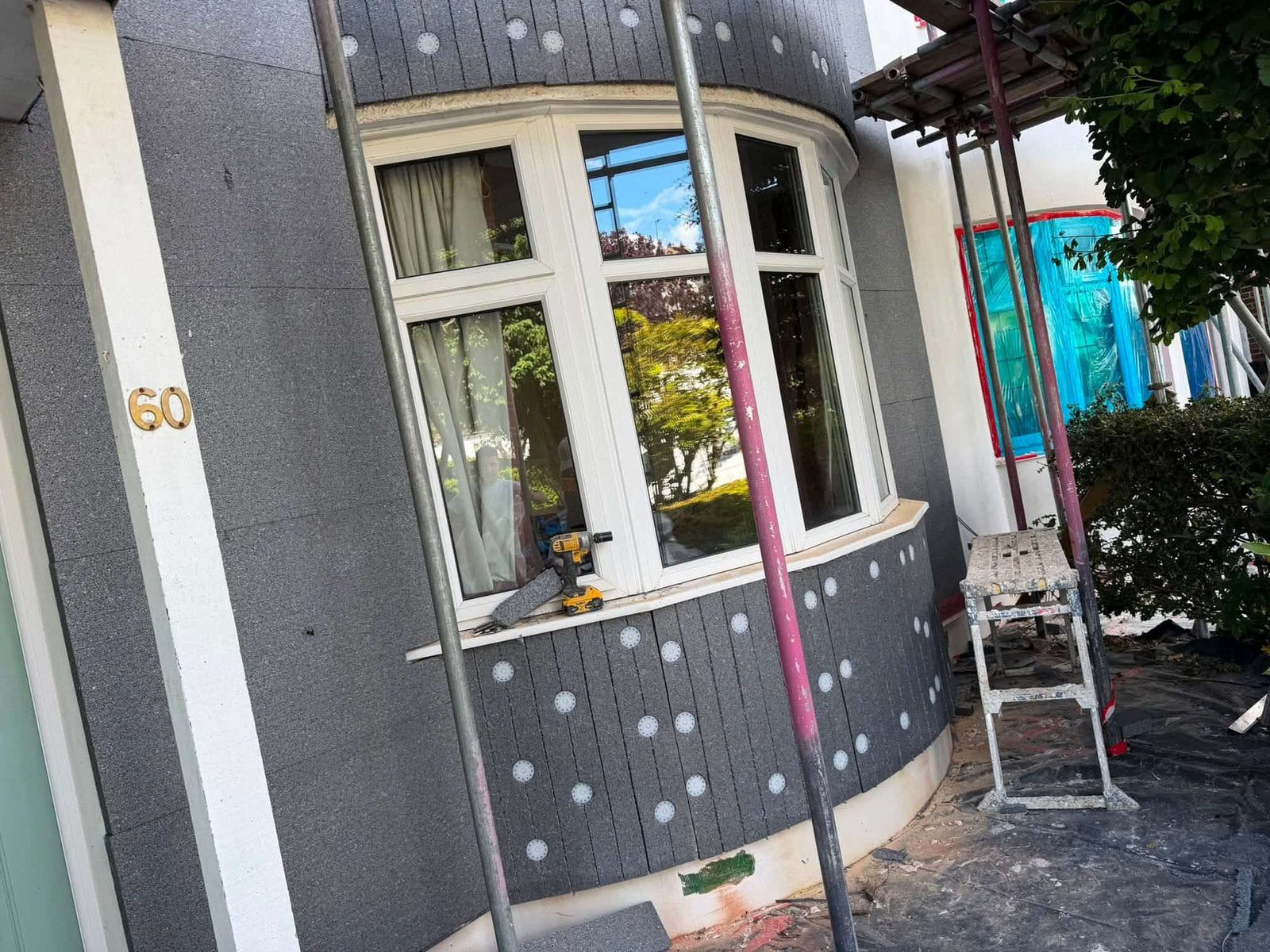
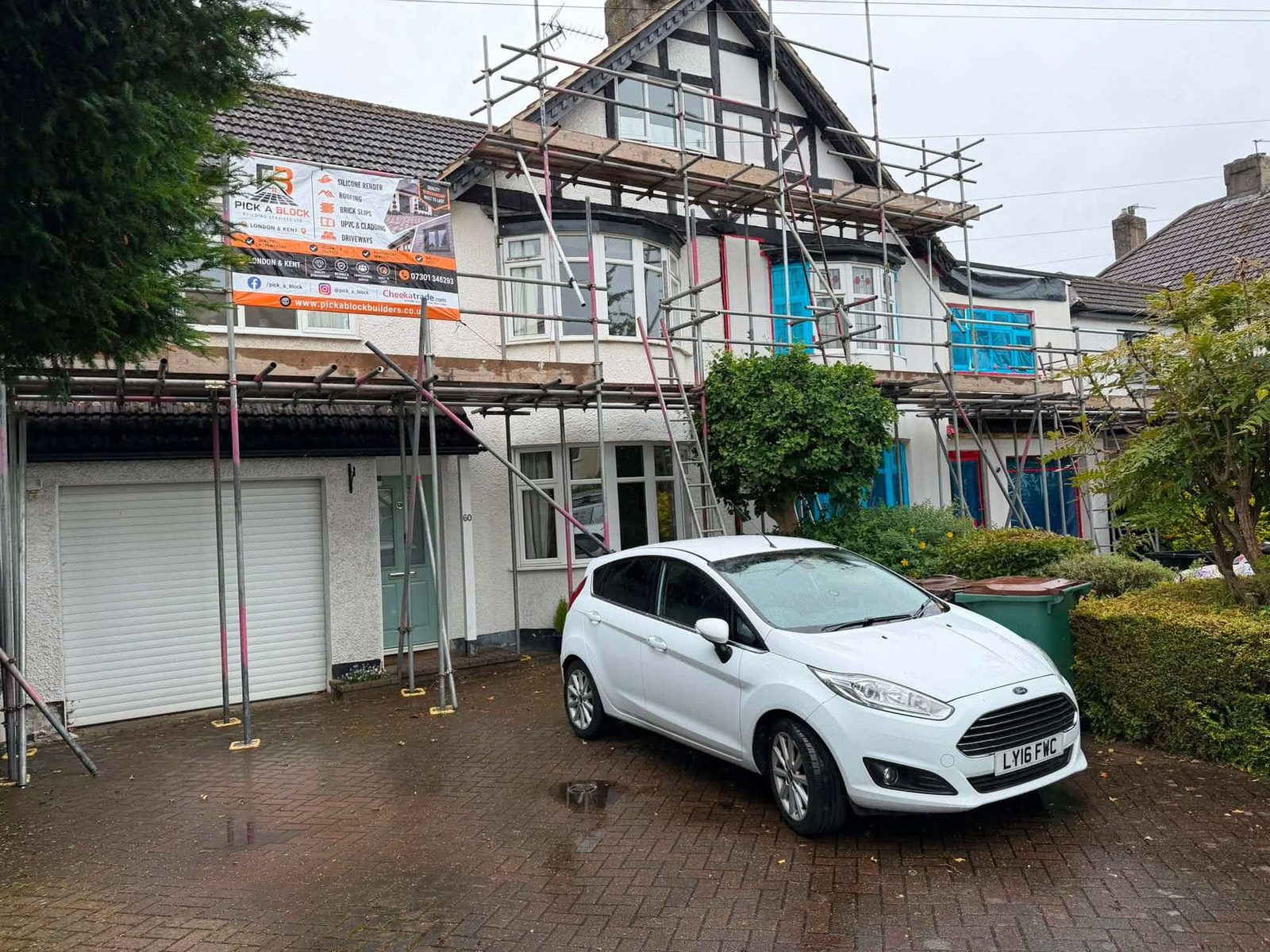
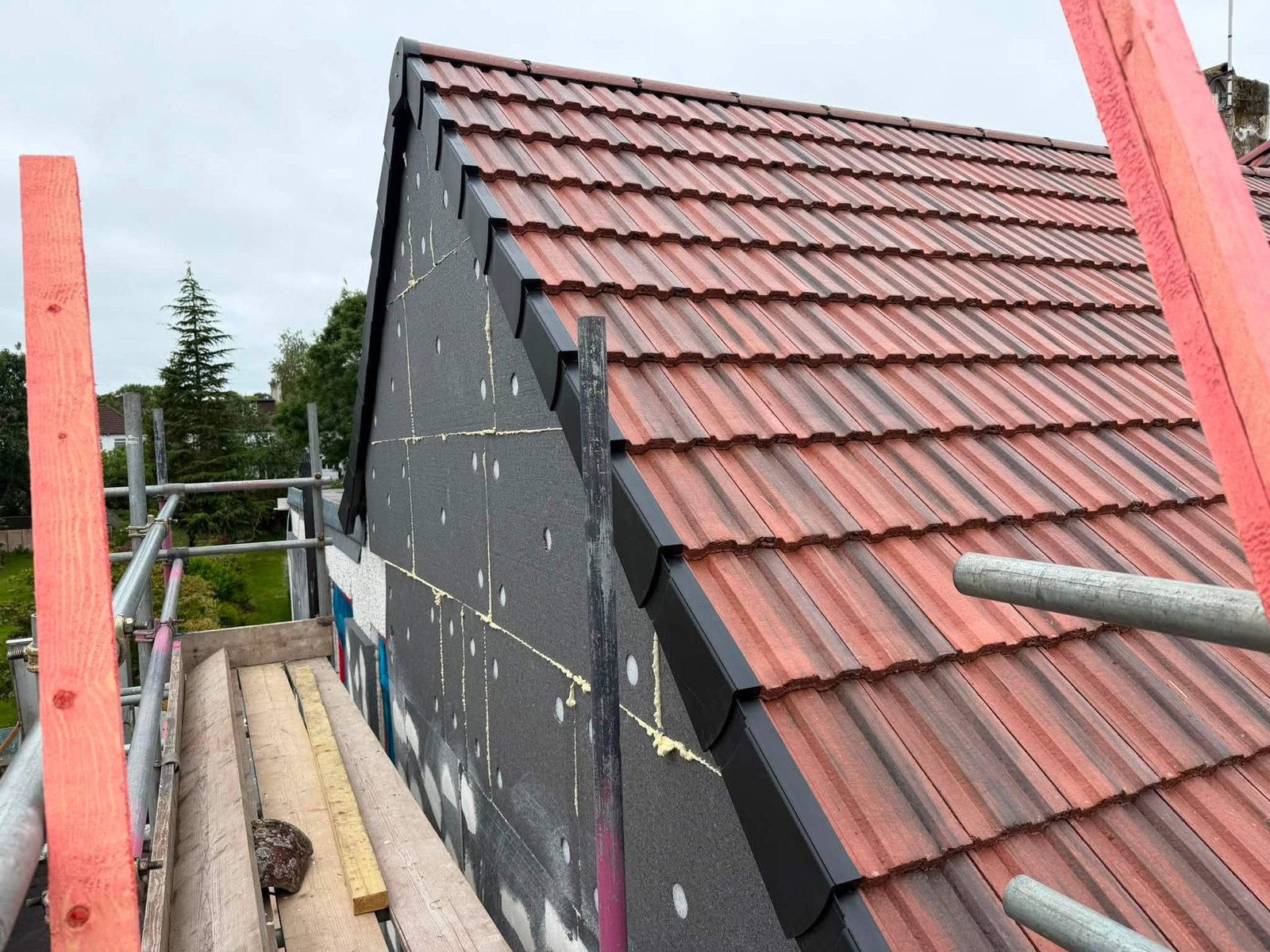
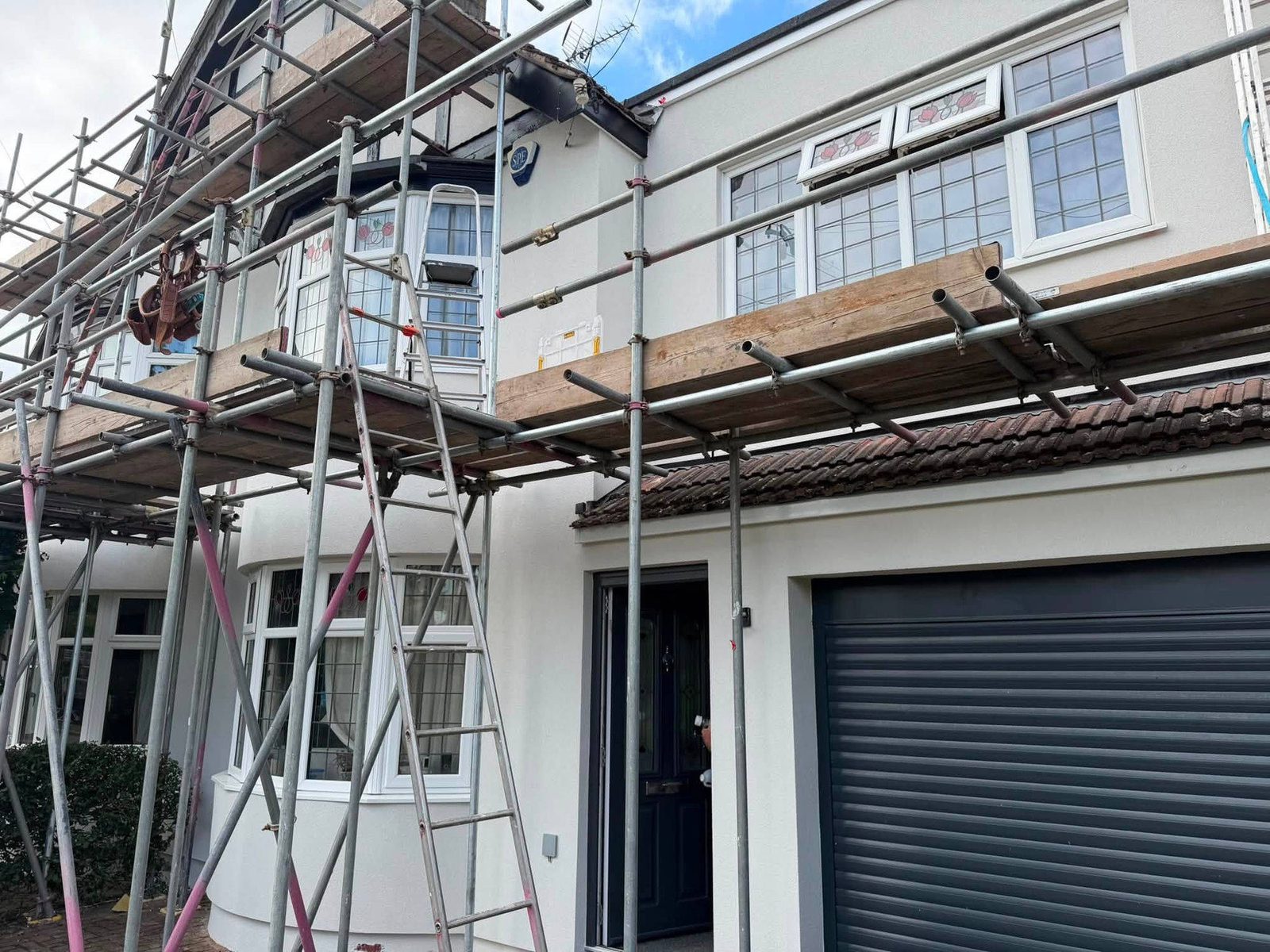
The same house, from the same spot on the pavement
Is this the right answer for your house?
If your walls are solid brick and cold, insulation under the render is usually the better answer than render on its own. You are paying for the scaffold either way, so the boards are the cheap part of the job to add while it is standing.
If the house has a cavity wall that has never been filled, external insulation is not automatically the right answer for you, and we will say so rather than quote you for it.
If the render already on the wall is sound and you only dislike the colour, say that too. Sometimes the honest answer is that you do not need us to take it all off.
Permitted development rights for render and cladding are removed in conservation areas, National Parks, National Landscapes and World Heritage Sites. A listed building needs consent wherever it stands. That makes it a planning question before it is a building one, and we check the address before we quote rather than halfway up a scaffold.
If the roof is tired as well, do both off the one scaffold. If render is not right for the elevation at all, brick slips or cladding may be. And if you are not sure we come out to you, ask — the team travel significant distances to get a job sorted.
One review, published in full
We recently had our roof replaced and our home fully insulated and rendered, and happy with the finished result.
From the initial quotation through to completion, the team were friendly, professional and worked incredibly hard. They were always happy to answer our questions and kept us informed throughout the project.
The quality of the workmanship really stands out. The new roof, leadwork, gutters, fascias and insulated silicone render have completely transformed the appearance of our home. The attention to detail is excellent, and the house now looks modern, fresh and finished to a very high standard.
The main bulk of the work only took two weeks! Like any major building project, there were a few snagging items and the final clean-up took a little longer than we'd expected.
We would recommend them to anyone looking for roofing or rendering work. Thank you to the whole team for your hard work.
Common questions
Does external wall insulation cause damp?
Badly fitted, it can, and that is what went wrong on the installations that made the news: gaps between boards leave cold lines running through the insulation, and condensation forms on cold surfaces. Fitted properly it does the opposite. The inside face of your wall is no longer the cold surface in the room, so there is nothing there for the moisture in the air to condense onto. The detailing is the whole job.
Do I need planning permission for it?
Usually not on an ordinary unlisted house. Permitted development rights for render and cladding are removed in conservation areas, National Parks, National Landscapes and World Heritage Sites, and a listed building needs consent wherever it is. Check with your council before you commit. We will tell you if we think it applies to your address.
How much does it cost?
It depends on the size of the elevations, what is on the wall now and the access, so Kyren measures up before he gives you a number. The visit is free, the quote is written, the scaffold is its own line on it, and there is no money upfront.
Is scaffold part of the price you quote?
No, and the quote says so. Scaffold is its own line on it. Folding it into a square metre rate makes the headline number look better and moves the surprise to the end of the job, which is not how we would want to be quoted either.
How long does it take?
It depends on the size of the elevations, the weather, and whether the roof is being done at the same time. Kyren gives you a realistic window when he quotes rather than an optimistic one.
Do I have to move out while it is done?
No. All of the work is on the outside of the house. The windows are masked, so it is darker indoors for a few days, but you keep your rooms and your floor space and you stay in the house.
Which insulated render systems do you use?
K Rend and Licata. Both are manufacturer systems and you can look either of them up before you decide.
What is the guarantee?
20 years, issued in writing when the scaffold comes down. Pick A Block is fully insured and there is no money upfront.
Still want a price?
Three details is all it takes. Or ring 07301 346293 — he answers his own phone.